The Farm Behind the Flavor: How a Coffee's Human Story Transforms What You Taste
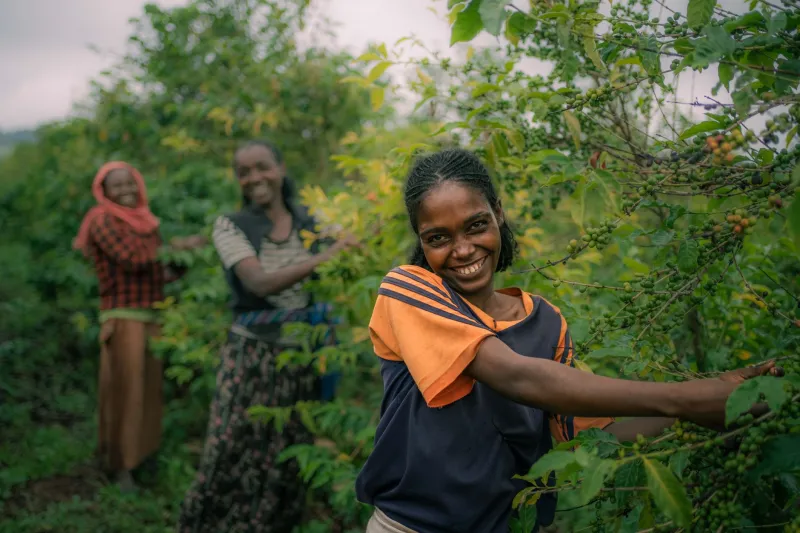
There is a question worth sitting with the next time you lift a cup of specialty coffee to your lips: What would this taste like if you knew nothing about it?
The answer, according to a growing body of research in sensory psychology and cognitive science, is that it would taste different. Measurably, demonstrably different. Not because the coffee itself would have changed, but because the human brain does not evaluate flavor in isolation. It evaluates flavor in context—and the richest context a cup of coffee can carry is the human story embedded within it.
This is the argument at the heart of Maruyama Coffee's sourcing philosophy, and it is one that deserves serious examination. Not as marketing language, but as a genuine claim about the nature of sensory experience.
What Neuroscience Has to Say About Context and Taste
The relationship between expectation, narrative, and sensory perception has been documented across multiple fields. In a now-classic series of experiments, researchers found that wine drinkers consistently rated the same wine as more complex and enjoyable when it was presented with a higher price point. A similar effect has been demonstrated with food labeled as "organic" or "artisanal"—identical products receive higher sensory ratings when framed by positive contextual information.
For years, this phenomenon was discussed primarily as a bias to be corrected—a contamination of pure sensory evaluation. But a more nuanced reading of the research suggests something different: that context is not an interference with perception, but a constitutive part of it. The brain does not first receive raw sensory data and then apply meaning; it constructs sensory experience from the beginning with meaning already woven in.
Dr. Gordon Shepherd, a neuroscientist at Yale whose work has focused on the neurogastronomy of flavor, has argued that flavor is not a property of food or drink—it is a construction of the brain. "The brain creates the sensation of flavor," he has written, "using information from the nose, mouth, and other senses, but also from memory, expectation, and context."
If this is true—and the evidence strongly suggests it is—then knowing the story of a coffee farm is not merely enriching background information. It is an active ingredient in what you taste.
The Specific Weight of a Farmer's Decision
Consider what it means, in concrete terms, to know the human story behind a specific coffee.
Maruyama Coffee's sourcing relationships in Ethiopia, Guatemala, and beyond are built on years of direct engagement with individual producers—relationships that go well beyond transactional exchange. When Maruyama's founder, Kentaro Maruyama, travels to origin to meet a farming family, the conversation is not simply about price and volume. It is about the specific decisions that family has made: the choice to maintain shade-grown cultivation despite the lower yields it produces, the decision to invest in a raised drying bed rather than the faster, cheaper mechanical dryer, the generational knowledge of when to pick a cherry at precisely the right moment of ripeness.
These decisions have direct sensory consequences. Shade-grown cultivation produces beans that develop more slowly, accumulating greater complexity of flavor. Raised-bed drying allows for more even airflow, reducing the fermentation inconsistencies that can introduce unwanted off-notes. Precise cherry selection—harvesting only fully ripe fruit—eliminates the under-ripe material that contributes to sharp, grassy flavors.
When you know these things, you taste them differently. The brightness in a well-processed Ethiopian natural is not simply an abstract sensory note—it is the result of a specific choice made by a specific person at a specific moment in the harvest cycle. The knowledge transforms a sensation into a narrative event.
A Conversation With Meaning Already in It
There is a tendency in specialty coffee culture to treat tasting notes as objective descriptions—a kind of flavor map that tells you what to find in a given cup. Blueberry. Dark chocolate. Stone fruit. Jasmine. These descriptors are useful, but they risk flattening the experience into a matching exercise rather than an act of discovery.
The richer invitation is to approach a cup of coffee the way you might approach a conversation with someone whose full history you are gradually learning to understand. The flavors are not simply there to be identified—they are expressions of decisions, circumstances, and relationships. The faint earthiness in a Guatemalan coffee from a high-altitude farm is not just an earthy note; it is the mineral signature of a specific volcanic soil, shaped by a specific elevation, tended by a family whose relationship with that land spans multiple generations.
When you know that, the earthiness means something. And the brain, constructing flavor from all available information, responds accordingly.
Why Direct-Trade Relationships Make This Possible
The human stories that transform coffee tasting are not universally available. They require a sourcing model that prioritizes relationship over transaction—one in which the importer or roaster has genuine, sustained engagement with the producer, rather than simply purchasing through an intermediary.
This is precisely what distinguishes Maruyama Coffee's approach from commodity sourcing. The direct-trade relationships that Kentaro Maruyama has cultivated over decades of travel to origin are not simply supply chain efficiencies. They are repositories of narrative—the kind of specific, humanly grounded knowledge that, when shared with the consumer, fundamentally enriches the act of drinking.
It is worth being precise about what this means in practice. A bag of coffee that carries a farm name, an elevation, and a processing method is a beginning. But a bag of coffee accompanied by the knowledge that the farmer's grandmother introduced the specific heirloom variety now growing on that land, or that last season's unseasonal frost required a difficult harvest decision that ultimately concentrated the fruit's sweetness—that is something qualitatively different. That is a cup with a conversation already inside it.
The Discovery That Was Always About People
The most transformative discovery in specialty coffee, ultimately, is not about a particular variety, processing method, or brewing technique. It is the recognition that every exceptional cup is the product of human intention—a long chain of deliberate decisions made by people whose names and faces and histories can, in the right sourcing model, be known.
To drink with that knowledge is to drink differently. The flavors do not change, but your relationship to them does. And that relationship—between the person holding the cup and the people who made it possible—is where the deepest dimension of coffee's complexity lives.
The bean tells part of the story. The farm tells the rest. And the cup, when you know both, becomes something worth discovering again and again.