Certified, Sustainable, Ethical: What Those Labels on Your Coffee Bag Actually Mean
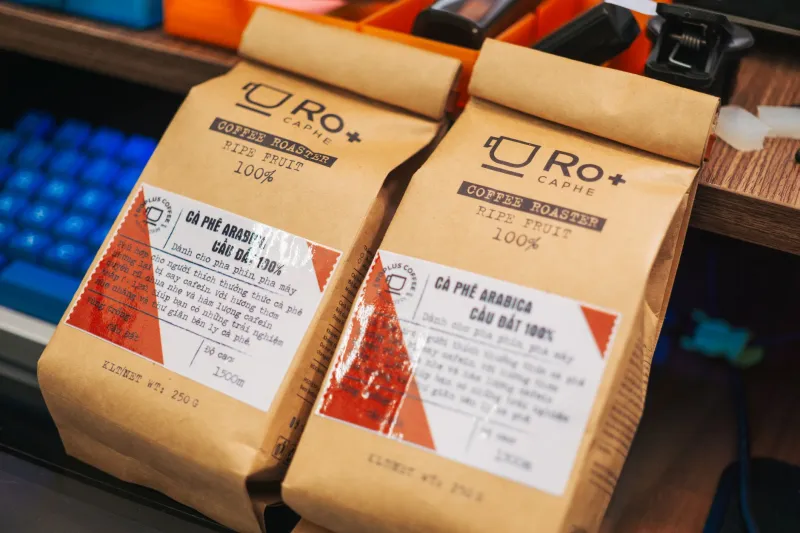
Walk through the coffee aisle of any specialty grocer in the United States, or browse the online storefronts of independent roasters, and you will encounter a familiar constellation of claims: sustainably sourced, ethically traded, carbon-neutral, farmer-direct. These phrases have become so prevalent that they function less as meaningful distinctions and more as ambient background noise—comforting, perhaps, but rarely interrogated.
For the discerning coffee buyer, this is precisely where the problem begins. The specialty coffee market has matured considerably over the past two decades, and with that maturity has come a sophisticated layer of marketing language designed to appeal to consumers who care about where their coffee comes from. Some of that language reflects genuine, verifiable practice. A meaningful portion of it does not. Understanding the difference requires more than reading the back of a bag—it requires knowing what questions to ask and where to look for honest answers.
The Certification Landscape: Useful, but Incomplete
Third-party certifications were developed, in large part, to address a real problem: consumers have no direct visibility into the supply chains that produce their food. Organizations like Fair Trade USA, Rainforest Alliance, and USDA Organic stepped in to offer assurance through audited standards. These programs have delivered measurable benefits in specific contexts, and dismissing them entirely would be an overreach.
That said, each certification carries distinct limitations that are rarely disclosed on the packaging itself.
Fair Trade USA, for instance, sets a floor price for green coffee and requires compliance with certain labor standards. However, the certification applies to cooperatives rather than individual farmers, which means the distribution of premiums within a given cooperative is not directly regulated. A cooperative can hold Fair Trade certification while individual smallholder members receive only a fraction of the associated premium—or none at all, depending on internal governance structures.
Rainforest Alliance merged with UTZ in 2018 and has since operated under a blended certification standard. The revised framework introduced graduated tiers rather than a binary pass/fail model, meaning a product bearing the Rainforest Alliance seal may reflect partial compliance rather than full adherence to the program's highest standards. The frog logo on your bag does not communicate which tier applies.
USDA Organic certification speaks to agricultural inputs—specifically, the prohibition of synthetic pesticides and fertilizers—but says nothing about labor conditions, wage fairness, or the economic wellbeing of the farmers involved. A coffee can be certified organic while being produced under conditions that specialty buyers would find deeply troubling.
None of this renders these certifications worthless. They provide a floor. The question for serious coffee buyers is whether that floor is sufficient—and whether a roaster's claims extend meaningfully beyond what certification alone can verify.
Vague Language and the Art of Implication
Beyond formal certification, specialty coffee marketing has developed a vocabulary of implication—phrases that evoke ethical practice without asserting it directly. Terms like sustainably sourced, responsibly traded, and supporting farming communities are largely unregulated. Any roaster can use them without meeting any defined standard.
This is not always a sign of bad faith. Some roasters operating at smaller scales maintain genuinely close relationships with producers but have not pursued formal certification due to cost or administrative burden. Their sourcing may be exemplary; their language simply lacks external validation.
The challenge is that the same vague language can just as easily conceal the opposite reality. A roaster purchasing commodity-grade coffee through multiple intermediaries can describe that coffee as ethically sourced without any mechanism to contradict the claim. The phrase carries no enforceable definition.
When evaluating a roaster's sustainability narrative, consider whether their language is specific or general. Claims like we pay above Fair Trade minimums directly to this cooperative in Huila, Colombia, and publish the price annually are verifiable and meaningful. Claims like we are committed to the wellbeing of coffee farmers everywhere are neither.
What Genuine Transparency Actually Looks Like
Routers who source with genuine intentionality tend to communicate differently than those relying on marketing convention. Several concrete signals are worth looking for.
Published purchase prices. A small but growing number of roasters disclose the actual price paid for their green coffee, often expressed as a multiple of the C-market commodity price or as a fixed dollar-per-pound figure. This level of transparency is uncommon and, when present, is a meaningful indicator of accountability.
Named farms and traceable lots. Single-origin coffees that identify not just a country or region but a specific farm, cooperative, or processing station are inherently more traceable. When a roaster can tell you that a particular lot came from a named producer—and can describe the relationship with that producer in concrete terms—the sourcing claim rests on a firmer foundation.
Consistent long-term sourcing relationships. Ethical sourcing is not a transaction; it is a practice sustained over time. Roasters who return to the same producers year after year, who adjust purchasing volumes to support farmers through difficult harvests, and who invest in producer development programs demonstrate a commitment that goes beyond marketing. Look for evidence of multi-year relationships rather than rotating origin stories.
Acknowledgment of complexity and imperfection. Roasters who speak honestly about the challenges of ethical sourcing—acknowledging that supply chains are complicated, that conditions vary, that continuous improvement is an ongoing effort rather than an achieved state—tend to be more credible than those presenting a seamless narrative of unqualified virtue.
The Right Questions to Ask Before You Buy
If you are serious about aligning your purchasing with your values, developing a short list of questions to apply to any roaster's sourcing claims is a practical starting point.
Where, specifically, does this coffee come from? If the answer is a country or continent rather than a region, farm, or cooperative, the supply chain visibility is limited.
What price was paid for this green coffee? If this information is unavailable or deflected, that is itself informative.
How long has this roaster been purchasing from this producer? Longevity suggests genuine relationship rather than opportunistic sourcing.
What does the certification on this bag actually require? A few minutes with a certification organization's published standards will clarify what the logo does and does not guarantee.
Does this roaster's public communication describe challenges as well as achievements? Honest sourcing narratives acknowledge difficulty. Polished ones often do not.
A More Demanding Standard
The specialty coffee industry has accomplished something genuinely significant: it has made origin, quality, and producer relationships central to the conversation about coffee. That is worth acknowledging. But the same commercial pressures that drive quality also create incentives to perform ethics rather than practice them.
For consumers willing to look beyond the label, the information needed to make informed decisions is often available—in sourcing reports, published pricing, producer profiles, and the specificity (or lack thereof) of a roaster's public communication. The work of discovery, in this context, is not just about finding exceptional coffee. It is about understanding who produced it, under what conditions, and whether the story being told holds up to scrutiny.
At Maruyama Coffee, sourcing decisions are built on relationships developed through direct farm visits and sustained purchasing commitments. That approach does not make for simple marketing copy—but it does make for an honest account of where the coffee comes from and what it took to bring it to your cup.