Following the Harvest: How Seasonal Windows and Microclimates Define the Flavors in Your Cup
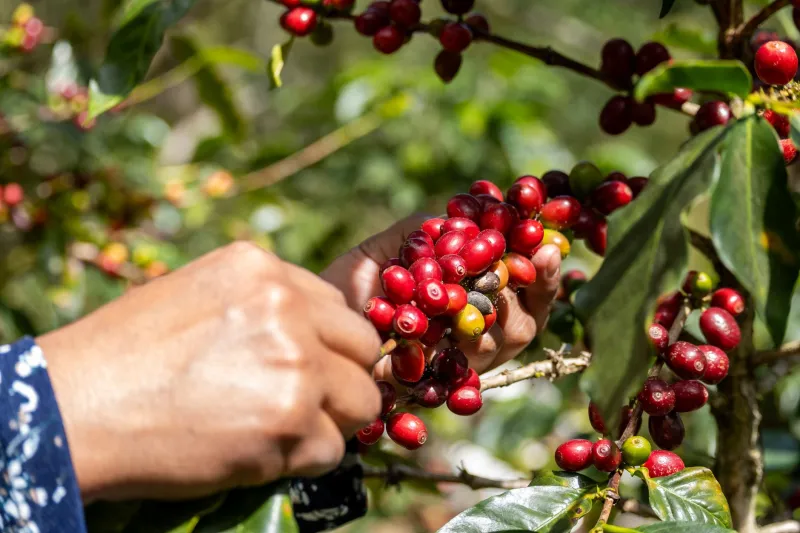
For many American coffee drinkers, the bag on the shelf feels like a constant — a reliable ritual, a familiar flavor. But the coffee inside that bag is anything but static. It is the product of a specific place, a specific moment in the agricultural calendar, and a set of atmospheric conditions that will never repeat themselves in quite the same way. Understanding how seasons and microclimates shape what ends up in your cup is one of the most rewarding discoveries a specialty coffee enthusiast can make.
The Coffee Plant Is a Seasonal Crop — and That Changes Everything
Coffee, like wine grapes or heirloom tomatoes, is fundamentally a seasonal agricultural product. The Coffea arabica plant flowers, sets fruit, and ripens on a schedule dictated by its local environment — primarily rainfall patterns, temperature ranges, and the angle of sunlight across a given hillside. Unlike commodity coffee, which is blended and standardized to erase these variations, specialty coffee celebrates them.
In broad terms, the global coffee harvest is staggered across a rolling annual window. Central American origins — Guatemala, Honduras, Costa Rica — typically peak between November and March. East African countries such as Ethiopia and Kenya harvest from October through January, while many South American origins, including Brazil and Colombia, see their primary crops come in between May and September. Colombia, owing to its unique geography, benefits from two distinct harvest periods per year, a characteristic that gives specialty roasters additional flexibility in sourcing.
This staggered calendar means that, for a roaster sourcing globally, fresh-crop coffees are available at different points throughout the year. What arrives at a roastery in February will differ meaningfully from what arrives in August — not because quality has changed, but because the origin has.
What Is a Microclimate, and Why Does It Matter?
Beyond the broad strokes of national harvest windows lies something more nuanced: the microclimate. A microclimate is the distinct atmospheric and soil environment experienced within a small, defined geographic area — often a single valley, ridge, or slope. Two farms separated by only a few kilometers can experience meaningfully different temperature swings, humidity levels, cloud cover, and drainage conditions. Each of those variables influences how a coffee cherry develops and, ultimately, how the resulting bean tastes.
Elevation is perhaps the most discussed microclimate variable in specialty coffee. At higher altitudes, cooler temperatures slow the maturation of the coffee cherry, allowing sugars and organic acids to develop over a longer period. The result is often a cup with greater complexity — brighter acidity, more layered sweetness, and a more defined aromatic profile. Lower-elevation coffees, by contrast, tend toward a heavier body with more muted acidity, characteristics that suit different brewing methods and palate preferences.
But elevation is only one factor. Volcanic soil composition, proximity to rivers or forests, the direction a slope faces relative to prevailing winds — all of these contribute to what growers and roasters sometimes call the "terroir" of a coffee. Much like the concept as applied to wine, terroir in coffee describes the sum of environmental influences that make one lot distinct from another, even within the same country or cooperative.
Why Your Favorite Single-Origin May Taste Different in Spring Than in Fall
This is a question that surprises many specialty coffee drinkers: why does the Ethiopian Yirgacheffe I loved last October taste slightly different now? The answer lies in crop timing and post-harvest aging.
When a new crop arrives from origin, it carries a freshness and brightness that reflects its recent harvest. As months pass and the green coffee rests before roasting, some of those volatile aromatic compounds shift. A coffee that tasted vividly floral in February may present with more muted, rounded characteristics by the following autumn — not because the roaster changed anything, but because the coffee itself has aged.
At the same time, the coffee a roaster is offering in October may come from a different harvest lot than the one available in April. Even within a single origin and farm, annual variations in rainfall or temperature produce subtly different cup profiles from one crop year to the next. Specialty roasters who source with intention track these changes and communicate them transparently, which is why reading the crop year on a specialty coffee bag is genuinely informative rather than incidental.
How Maruyama Times Its Sourcing to Capture Peak Expression
At Maruyama Coffee, sourcing is not simply a procurement exercise — it is an act of careful timing. The team travels extensively to origin, visiting farms during or immediately after harvest to evaluate lots in their freshest state. This proximity allows for selections based on sensory evaluation at the source, rather than relying solely on samples that have traveled weeks through a supply chain before being assessed.
By aligning purchasing decisions with the peak of each region's harvest window, Maruyama is able to offer coffees at the moment their flavor potential is most fully expressed. A Kenyan lot selected in December, for instance, will reflect the bright citric acidity and berry-forward complexity that characterizes that origin's best crop years — characteristics that would begin to soften if sourcing were delayed or approached as a secondary consideration.
This timing-conscious approach also means that the Maruyama offering changes meaningfully throughout the year. Rather than maintaining a static menu of origins, the selection rotates as new crops arrive and previous lots are retired. For the attentive coffee drinker, this creates an opportunity to follow the global harvest calendar as a form of seasonal discovery.
Discovering New Favorites by Following the Calendar
One of the most practical applications of understanding harvest seasonality is using it as a guide for exploration. If you find yourself drawn to the clean, tea-like delicacy of a washed Ethiopian coffee, the peak window for fresh-crop Ethiopian lots typically falls between late autumn and early spring in the United States. Seeking out those offerings during that window will likely yield the most vivid expression of the flavors you enjoy.
Conversely, if you prefer the chocolate-forward, full-bodied character of a Brazilian natural process coffee, summer and early fall tend to bring the freshest lots from that origin to specialty roasters. Aligning your purchasing habits with these windows is a simple, rewarding way to deepen your engagement with coffee as a seasonal product.
The global coffee harvest calendar is not a rigid schedule — weather, political conditions, and logistics all introduce variation — but it provides a useful framework for the curious drinker who wants to understand what they are tasting and why.
The Cup as a Moment in Time
Specialty coffee, at its most meaningful, is a record of a specific place at a specific moment. The microclimate that shaped a particular lot, the harvest window that determined when those cherries were picked, the post-harvest processing that preserved or transformed their inherent character — all of these factors are present, in some form, in the cup you brew each morning.
Learning to read those signals is one of the more quietly profound pleasures that specialty coffee offers. It transforms a daily ritual into a form of discovery — one that, by its very nature, changes with the seasons.