When Premium Pricing Misleads: Navigating the True Value of Specialty Coffee
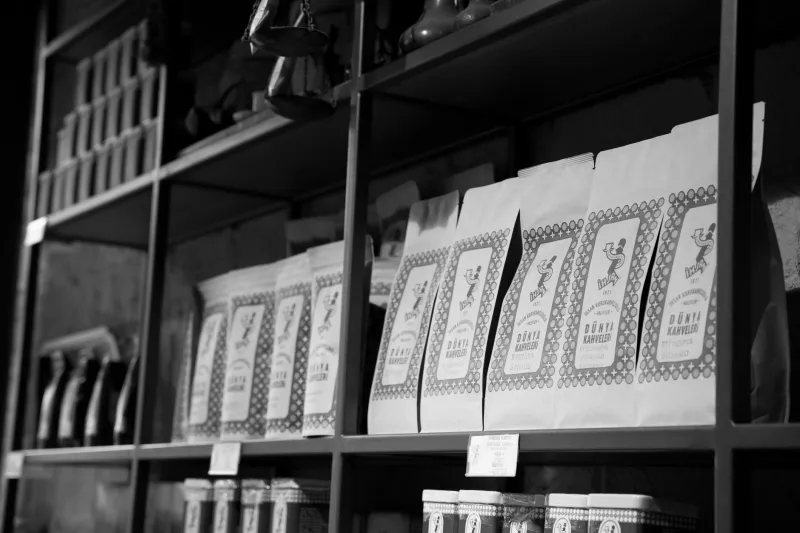
There is a quiet assumption embedded in the specialty coffee world: that cost is a reliable proxy for quality. Walk into any well-appointed coffee shop in Brooklyn, Portland, or Chicago's West Loop, and you will encounter bags priced anywhere from eighteen to sixty dollars per twelve ounces, often with minimal explanation of what separates one from another. The consumer, confronted with this range, frequently defaults to a familiar heuristic—if it costs more, it must taste better.
This assumption deserves scrutiny.
The relationship between price and flavor in specialty coffee is far more complicated than the shelf suggests. While certain cost drivers do reflect genuine quality, others are artifacts of branding, supply chain opacity, and market positioning. Developing the ability to distinguish between the two is not cynicism—it is the foundation of intentional purchasing.
What Actually Drives the Price of a Specialty Coffee
Before questioning a price point, it helps to understand the legitimate forces that push it upward. Growing coffee at altitude, in small lots, with careful hand-picking and meticulous post-harvest processing, is expensive. Farmers who invest in raised drying beds, controlled fermentation, or anaerobic processing methods incur real costs that must be reflected somewhere in the supply chain.
Fair and direct trade relationships—the kind Maruyama Coffee has cultivated across decades of sourcing in Ethiopia, Guatemala, and beyond—also carry a premium. When a roaster pays above commodity rates to sustain a long-term partnership with a specific farm, that cost is absorbed into the retail price. This is a premium worth paying: it supports producer livelihoods, incentivizes quality, and ensures traceability.
Freight, import logistics, green coffee storage, and skilled roasting also contribute meaningfully to final cost. A roaster employing a seasoned professional who profiles each lot individually is operating differently than one running high-volume blends through automated systems.
These are defensible premiums. They reflect choices made at every stage of a coffee's journey that genuinely influence what ends up in your cup.
Where the Disconnect Begins
The problem arises when price is inflated by factors that have little to do with what you taste.
Packaging is among the most potent of these factors. Matte black bags with embossed typography, hand-stamped kraft paper, and bespoke ceramic vessels communicate luxury effectively—but they communicate nothing about cup quality. Design budgets can be substantial, and those costs are passed to the consumer. A coffee in modest packaging from a less-recognized roaster may, in a blind tasting, outperform its glossier counterpart.
Roaster reputation operates similarly. In specialty coffee, certain names carry cultural cachet that commands a price premium independent of what is in the bag at any given time. This is not inherently dishonest—reputation is built on consistent quality over time—but it does mean that a well-regarded roaster's less exceptional lots may be priced as if they were exceptional, simply because of the name on the label.
Marketing narratives, too, can obscure rather than illuminate. Terms like "micro-lot," "competition-grade," and "natural process" signal quality to an informed buyer, but they have also been adopted broadly enough that they no longer guarantee a specific flavor experience. A natural-process coffee can range from brilliantly complex to ferment-forward in ways that some palates find off-putting. The label alone tells you very little.
The Farm Economics Complication
There is an ethical dimension to this conversation that resists easy resolution. Sometimes a coffee is priced high not because of exceptional quality at the cup level, but because the economics of its production are genuinely difficult. A small-holder farmer in a remote region of Burundi or Yemen, operating without cooperative infrastructure and navigating volatile export conditions, may produce coffee that is excellent but not exceptional—and yet a fair price for that coffee is still elevated by market standards.
As a consumer, you may choose to pay that premium knowingly, as an expression of values rather than purely a pursuit of flavor. This is a legitimate and admirable choice. The key is making it with clarity: understanding that you are supporting a producer rather than purchasing a categorically superior sensory experience. Intentional spending and informed spending are not the same thing, but they are both preferable to spending on assumption.
Building a More Discerning Approach
So how does one navigate this landscape with confidence?
First, prioritize transparency over aesthetics. Roasters who publish detailed sourcing information—farm name, elevation, processing method, harvest year, and ideally cupping scores—are inviting scrutiny. That openness is itself a quality signal. When a bag offers only vague provenance like "Central America blend," the lack of specificity should prompt questions.
Second, taste comparatively and deliberately. Purchasing two or three coffees at different price points and brewing them under identical conditions—same grind size, same water temperature, same brew ratio—strips away the contextual cues that bias perception. What your palate registers without the price tag in view is often revelatory.
Third, develop a vocabulary for what you personally value in a cup. Brightness and acidity, body and sweetness, floral aromatics versus chocolatey depth—these are not universal hierarchies. A coffee that scores ninety points on a professional cupping form may not align with your preferences. Price and professional scores are useful reference points, not verdicts.
Finally, build relationships with roasters whose sourcing philosophy resonates with you. When a roaster demonstrates consistent integrity in how they source, communicate, and price their offerings—when their stated values are legible in both their practices and their products—that is the most reliable foundation for trust.
The Purpose Behind the Price
At Maruyama Coffee, the sourcing philosophy begins not with a price point but with a relationship. The question asked at origin is not "what will the market bear?" but "what does this coffee require to be expressed honestly?" That distinction shapes everything that follows—including, ultimately, what appears on the bag.
The goal of this kind of transparency is not to position any single coffee as the definitive premium choice, but to give you, the drinker, the information necessary to decide for yourself. In a market where price can mislead as easily as it can guide, that information is the most valuable thing a roaster can offer.
The most intentional cup is not necessarily the most expensive one. It is the one you chose with full knowledge of what you were reaching for—and why.