Soil, Sky, and Elevation: Decoding the Geography Behind Every Exceptional Cup
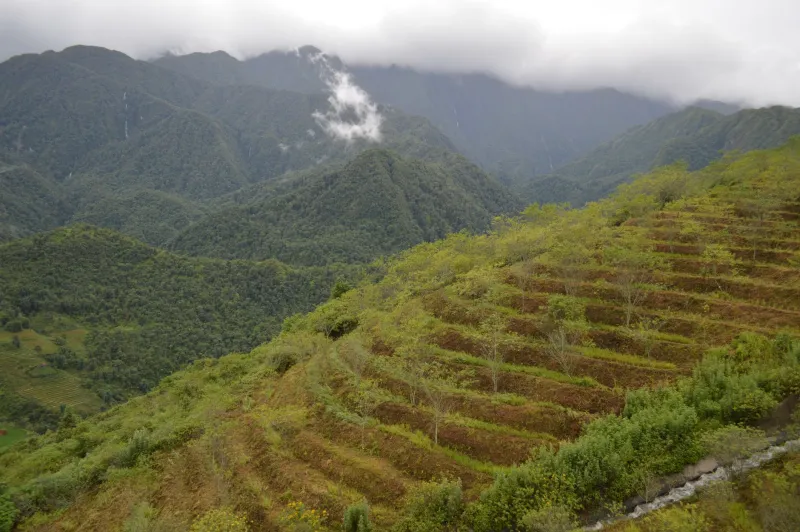
When a coffee strikes you as unexpectedly bright, or carries a sweetness that lingers longer than you anticipated, it is tempting to credit the roaster's skill or the precision of your brew. Both matter, of course. But the deeper explanation often lies thousands of miles away, embedded in the slope of a hillside, the mineral content of volcanic soil, or the particular rhythm of a growing season shaped by altitude and cloud cover. This is the domain of terroir — a concept long associated with wine, but no less essential to understanding specialty coffee.
Learning to read terroir is not an academic exercise. It is, ultimately, a way of tasting more deliberately and appreciating more fully the immense chain of natural forces that converge in every bag of single-origin coffee. At Maruyama Coffee, sourcing has always begun with place — with the conviction that exceptional flavor is inseparable from the geography that produced it.
What Terroir Actually Means for Coffee
The French term terroir translates loosely as "taste of place," and while it was codified in the context of European viticulture, its logic applies beautifully to coffee. In practical terms, terroir encompasses every environmental variable that influences how a coffee plant grows and how its cherries develop: altitude, soil composition, rainfall patterns, temperature fluctuations, humidity, and the surrounding ecosystem.
None of these factors operates in isolation. A farm situated at 1,800 meters above sea level in a region with rich volcanic soil and distinct wet and dry seasons will produce coffee that reflects all of those conditions simultaneously. The resulting cup is, in a very real sense, a portrait of that specific place at that specific moment in the agricultural calendar.
Altitude: The Pressure That Builds Complexity
Among the geographic variables that shape coffee flavor, elevation is perhaps the most consequential. At higher altitudes, cooler temperatures slow the maturation of coffee cherries significantly. That extended development period allows sugars to accumulate more gradually and complex organic compounds to form within the seed — what we eventually grind and brew.
The practical result is a coffee with greater acidity, more nuanced aromatics, and a density that holds up well through roasting. Coffees grown at lower elevations, by contrast, tend to mature faster, producing a simpler, often heavier cup with less brightness.
Maruyama's sourcing partners in Ethiopia's Yirgacheffe region, for instance, work at elevations frequently exceeding 1,900 meters. The coffees that emerge from those farms carry the unmistakable signature of high-altitude growing: a lively citric acidity, jasmine-like florals, and a clarity of flavor that low-altitude beans rarely achieve. That elevation is not incidental — it is foundational.
Soil: The Invisible Ingredient
Beneath every exceptional coffee farm lies a substrate that silently shapes what grows above it. Volcanic soils, common across many of the world's premier coffee-growing regions — from the highlands of Guatemala to the slopes of Mount Kenya — are particularly well-regarded for their mineral richness and excellent drainage. These soils release nutrients steadily, encouraging deep root development and contributing trace minerals that some researchers believe find their way, however subtly, into flavor.
In contrast, the red clay soils found in parts of Colombia and Central America offer different qualities: strong water retention and a distinct mineral profile that often manifests as a rounder, more structured body in the cup. Neither is superior in absolute terms; they simply produce different expressions.
Maruyama's sourcing philosophy has long emphasized visiting farms directly — walking the fields, examining the soil, understanding the agricultural context — rather than relying solely on cupping scores. That ground-level knowledge informs which partnerships are pursued and why a coffee from a particular plot might taste unlike anything else in the lineup.
Climate Patterns and the Rhythm of the Growing Season
Rainfall timing, dry seasons, and temperature ranges across the diurnal cycle all contribute to the texture and sweetness of a finished coffee. Regions that experience dramatic temperature swings between day and night — a characteristic of many high-altitude tropical growing areas — encourage the development of complex sugars within the cherry. The warmth of the day drives photosynthesis and growth; the cool of the night slows metabolism, preserving those compounds rather than burning through them.
Seasonal consistency matters as well. Coffee thrives in what agronomists call the "Bean Belt," the equatorial band stretching roughly between the Tropics of Cancer and Capricorn. Within that zone, however, microclimates vary enormously. The mist-laden hillsides of Huila, Colombia, create a very different growing environment than the sun-drenched plateaus of parts of Brazil — and those differences are legible in the cup.
Tasting Through a Geographic Lens
Understanding terroir enriches the tasting experience in a specific, practical way: it gives you a framework for interpreting what you perceive rather than simply cataloguing sensations. When you notice a pronounced stone-fruit sweetness in a Kenyan coffee, you can connect that quality to the SL28 and SL34 cultivars that thrive in the country's high-altitude, red-soil conditions. When a Guatemalan coffee presents with chocolate depth and a mild, clean acidity, you can recognize the influence of the Antigua valley's volcanic terrain and relatively stable climate.
Maruyama's tasting notes are written with this geography-to-cup connection in mind. They are not arbitrary descriptors meant to impress; they are invitations to engage with the specific conditions of origin. Reading those notes alongside the sourcing information for each coffee — the farm name, the region, the elevation — creates a richer picture than either element provides alone.
An Invitation to Explore
The most rewarding way to develop an appreciation for terroir is simply to taste across origins with curiosity and intention. Consider brewing a washed Ethiopian coffee alongside a natural-process Yemeni or a honey-process Costa Rican. Pay attention not just to what you taste, but to how those flavors feel — their weight, their persistence, their movement across the palate.
Geography, as it turns out, has a great deal to say. Learning to listen is one of the quiet pleasures of the specialty coffee journey.