The Intentional Cup: How a Thoughtful Brewing Practice Can Anchor Your Day
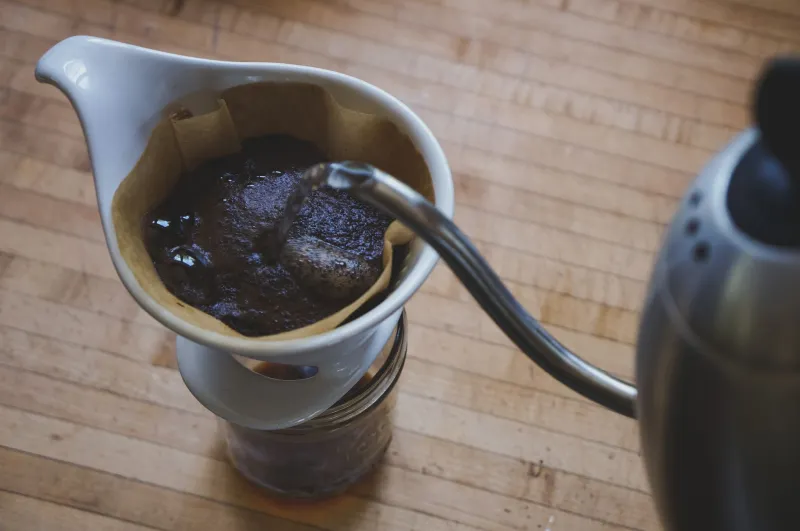
Most Americans encounter their first cup of coffee before they have fully woken up. It arrives quickly — from a drip machine set the night before, from a drive-through window, from a pod pressed in haste before the morning commute begins. The coffee does its job. The caffeine enters the bloodstream. The day accelerates.
There is nothing wrong with that, exactly. But there is something worth considering in the gap between coffee as fuel and coffee as practice. Specialty coffee, at its best, offers more than a caffeine delivery mechanism. It offers a structured pause — a brief, sensory-rich interval that, if approached with even modest intention, can reframe the entire texture of a morning.
At Discover Maruyama Coffee, we believe that how you brew is inseparable from what you taste. But we also believe that how you brew shapes how you begin. This is a guide to building a personal brewing ritual that is grounded, sustainable, and genuinely yours.
Why Ritual Matters More Than Routine
The difference between a routine and a ritual is not the sequence of actions — it is the quality of attention brought to them. A routine is executed. A ritual is inhabited.
Neuroscience and behavioral psychology have long noted that deliberate, repeated practices help regulate the nervous system and create a sense of agency and predictability, particularly in periods of stress or uncertainty. You do not need a clinical study to understand this intuitively. Think of the last time you made coffee slowly — measuring with care, listening to the kettle, watching the bloom of a pour-over — and compare that experience to the mechanical repetition of a hurried morning. The coffee may have been similar. The experience almost certainly was not.
The goal is not perfection or elaborate ceremony. It is simply presence — bringing your full, unhurried attention to a process that rewards exactly that.
Choosing Your Method with Intention
The first step in building a meaningful brewing practice is selecting a method that suits not just your flavor preferences, but your temperament and available time. There is no universally correct answer.
The pour-over — whether a Hario V60, a Kalita Wave, or a Chemex — demands the most active engagement. You control the pour rate, the water temperature, and the timing. For those who find value in a task that requires focused attention, the pour-over functions almost like a moving meditation. The mind has something specific to do, which makes it harder for anxious thoughts to crowd in.
The French press, by contrast, is more forgiving and more hands-off after the initial pour. It rewards patience rather than precision, making it well-suited to those who prefer to be present without being actively occupied — reading, stretching, or simply looking out a window while the grounds steep.
The AeroPress offers something in between: a compact, tactile process that produces excellent coffee quickly. Its portability also makes it a genuine option for travel, allowing your ritual to follow you rather than anchoring you to a single location.
Whichever method you choose, commit to it for at least a few weeks before experimenting. Familiarity builds fluency, and fluency is what allows the process to feel natural rather than effortful.
The Role of Quality Ingredients
A ritual built around mediocre materials is difficult to sustain. When the sensory reward is consistently underwhelming, the motivation to show up with intention diminishes. This is one reason why the coffee itself matters so much to the practice.
Single-origin coffees, sourced with the care and transparency that define Maruyama's approach, offer something that blends often cannot: a distinct, traceable character that changes with each new harvest and region. Brewing a washed Kenyan one week and a natural Ethiopian the next gives your ritual an element of discovery — a reason to pay attention that goes beyond technique.
Freshly ground coffee, ideally within thirty minutes of brewing, makes an audible difference in the cup. A burr grinder, even a modest hand grinder, is one of the most impactful investments a home brewer can make. Filtered water, heated to the appropriate temperature for your chosen method, completes the foundation.
These are not luxuries. They are the conditions that make the ritual worth returning to.
Designing Your Space and Time
Physical environment shapes psychological experience more than we typically acknowledge. A cluttered, chaotic kitchen makes intentional brewing harder — not impossible, but harder. A few small adjustments can shift the atmosphere meaningfully.
Consider keeping your brewing equipment organized and visible rather than stored away. The visual cue of your grinder and kettle on the counter serves as an invitation — a reminder that this practice is a standing appointment, not an occasional indulgence. Some people find that brewing in silence amplifies the sensory experience; others prefer low music or the ambient sounds of the morning. Neither is wrong. What matters is that the choice is made deliberately.
Time is the other design element. If your mornings are consistently compressed, a fifteen-minute pour-over session may be aspirational rather than realistic. Build your ritual around the time you actually have, not the time you wish you had. Even a five-minute AeroPress prepared with full attention is more restorative than a twenty-minute process executed in a state of frantic distraction.
Slowing Down to Taste
The final, perhaps most important, dimension of an intentional brewing practice is the act of tasting itself. Not drinking — tasting. Before the first functional sip, take a moment to engage the coffee as a sensory object. Notice the aroma as it blooms in the brewer. Observe the color and clarity in the cup. Take a small sip while the coffee is still quite hot and let it move across the full surface of your palate before swallowing.
This is not affectation. It is the practice of paying attention, extended from the brewing process into the drinking experience. Over time, this habit builds a more refined palate and, more importantly, a more grounded relationship with the moment itself.
In a culture that rarely stops moving, the deliberate cup is a quiet act of reclamation. It does not require a particular budget, a particular aesthetic, or a particular level of expertise. It requires only the willingness to show up — to your kettle, to your coffee, and to the morning — with a measure of care.
That, in the end, is what intentional brewing is about.