Grind Size and Flavor: The Home Brewer's Complete Guide to Dialing In Extraction
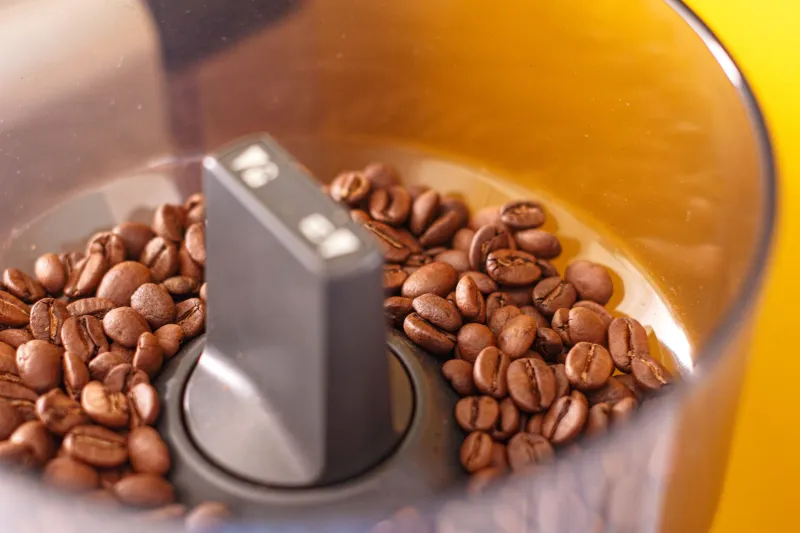
Of all the variables a home brewer controls, grind size may be the most consequential—and the most frequently misunderstood. Water temperature, brew ratio, and pour technique all matter, but none of them can fully compensate for an incorrect grind. When sourcing begins with exceptional beans, as it does at Maruyama Coffee, the grind becomes the final gateway between the farmer's careful work and what you taste in the cup.
Understanding how grind size influences extraction is not a matter of memorizing rules. It is a matter of developing an intuition grounded in principle.
What Extraction Actually Means
Extraction refers to the percentage of soluble material that water draws from ground coffee during brewing. Coffee grounds contain hundreds of compounds—acids, sugars, oils, and bitter alkaloids—that dissolve at different rates and temperatures. The sequence in which they extract is largely fixed: fruity acids and lighter aromatics dissolve early; sweetness and body follow; bitterness and astringency emerge last.
A well-extracted cup captures the desirable middle range of this sequence. Under-extraction leaves behind too much of the sweetness and balance, producing a brew that tastes sharp, sour, or thin. Over-extraction draws too far into the bitter, drying territory that overwhelms everything else.
Grind size controls the rate at which extraction proceeds by determining the total surface area exposed to water. Finer grinds expose more surface area, accelerating extraction. Coarser grinds expose less, slowing it down.
The Spectrum of Grind Sizes and Their Applications
Different brewing methods operate at different flow rates, contact times, and pressures. Each method has a corresponding grind range that allows for appropriate extraction within its constraints.
Extra Fine (Turkish-style grind): A powder-like consistency used almost exclusively for traditional Turkish coffee, where grounds remain in the cup and are never filtered out.
Fine (espresso range): A smooth, slightly gritty texture suited to espresso machines, where pressurized water passes through the puck in 25 to 35 seconds. Even small adjustments here—a single step on a quality burr grinder—can shift a shot from sour to balanced to bitter.
Medium-Fine (pour-over range): This is the territory of the V60, Chemex, and similar drip methods. Water flows through relatively quickly, and the grind must be calibrated to match the filter's resistance and the desired brew time.
Medium (flat-bottom drippers, drip machines): A versatile range suitable for Kalita Wave, Melitta, and most automatic drip brewers. The broader grounds allow for some margin of error while still yielding clarity and sweetness.
Medium-Coarse (Clever Dripper, some pour-overs): Appropriate for immersion-hybrid methods where extended steeping occurs before a drain phase.
Coarse (French Press, cold brew): Long contact times demand coarser grounds to prevent over-extraction. French press coffee brewed at four minutes with a fine grind will taste bitter regardless of bean quality.
How to Identify Under- and Over-Extraction by Taste
The most reliable diagnostic tool is your palate. Tasting with intention, rather than simply drinking, allows you to identify where your extraction is falling short.
Signs of under-extraction: A sharp, almost vinegary acidity that feels aggressive rather than bright. A thin or watery body. Flavors that seem incomplete, as though something is missing. The finish is short and hollow.
Signs of over-extraction: A dry, lingering bitterness that coats the mouth. Flavors that feel flat or muddy rather than layered. The sweetness that should anchor the cup is absent. The finish is harsh and prolonged.
A well-extracted cup: Balanced acidity that feels integrated rather than sharp. Sweetness that emerges naturally in the mid-palate. A finish that is clean and inviting. The origin characteristics of the bean—florals, stone fruit, chocolate, or citrus—are identifiable and distinct.
Adjusting Grind Size in Practice
When you taste under-extraction, grind finer. When you taste over-extraction, grind coarser. This is the fundamental logic of dialing in a brew.
However, grind adjustment should be made in isolation from other variables whenever possible. Changing grind size, water temperature, and dose simultaneously makes it impossible to determine which variable produced the change in flavor.
A productive adjustment sequence looks like this: establish a baseline recipe with fixed water temperature, dose, and brew time. Taste critically. If the result is under-extracted, reduce grind size by one or two steps on your grinder and brew again, keeping all other variables constant. Repeat until the flavor is balanced.
It is also worth noting that different coffees respond differently. A naturally processed Ethiopian coffee with dense fruit notes may require a slightly different grind than a washed Colombian of similar roast level. Altitude, processing method, and roast development all influence how readily a coffee extracts.
The Case for Investing in a Quality Burr Grinder
No brewing guide on grind size would be complete without addressing grinder quality. Blade grinders produce an inconsistent particle distribution—a mix of powder, medium grounds, and large chunks—that makes predictable extraction essentially impossible. Some particles over-extract while others under-extract, and the resulting cup reflects that chaos.
A quality burr grinder, whether flat or conical, produces a consistent and uniform particle size. This uniformity is what allows for meaningful adjustment and repeatable results. For home brewers serious about specialty coffee, a burr grinder is not a luxury—it is the foundation upon which everything else is built.
Bringing It Together
Grind size is not a setting you establish once and forget. It is an active variable that responds to your beans, your method, your water, and even the humidity in your kitchen. Developing the habit of tasting critically and adjusting deliberately is what separates a routine cup of coffee from one that genuinely reflects the quality of what was sourced and roasted.
When Maruyama Coffee selects a lot from a specific farm, elevation, and harvest window, the intention is that those characteristics arrive in your cup intact. Grind size, understood and applied with care, is how you honor that intention.