When Simplicity Reveals Everything: What Exceptional Beans Teach You About Brewing Less
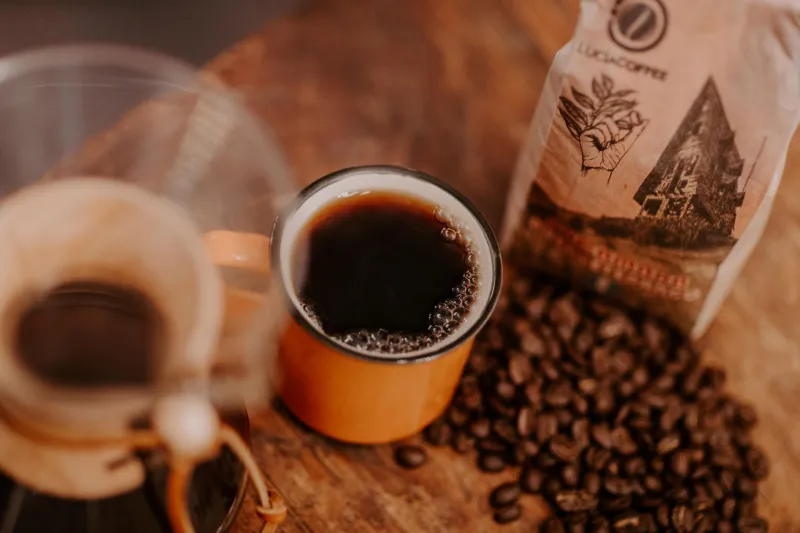
There is a tendency among enthusiastic home brewers to accumulate technique. New variables are introduced, parameters are refined, methods are layered one upon another in pursuit of the perfect cup. This impulse is understandable—specialty coffee rewards attention, and attention often expresses itself as complexity.
But experienced cuppers and roasters frequently observe the opposite phenomenon: that truly exceptional coffee, sourced with care and roasted with precision, reveals its finest qualities not through elaborate technique but through restraint. The bean, given the right conditions and the freedom to speak, does the work.
This is one of the more important lessons that single-origin specialty coffee can teach a home brewer.
The Difference Between Compensating and Revealing
Much of what passes for advanced brewing technique is, at its core, compensatory. Aggressive agitation, unconventional water temperatures, and elaborate multi-stage pours are often employed to coax flavor from beans that lack inherent complexity, or to correct for processing or roasting decisions that have muted the coffee's natural character.
When a coffee is genuinely exceptional—sourced from a specific farm at a specific elevation, harvested at peak ripeness, processed with care, and roasted to express rather than dominate its origin—the brewer's role shifts. The task is no longer to coax or compensate. It is to create conditions in which the coffee's existing character can emerge without obstruction.
This distinction changes how one approaches the brew. Instead of asking, "What can I add or adjust to improve this cup?" the more productive question becomes, "What can I remove or simplify to allow this coffee to be fully itself?"
What Simple Brewing Actually Requires
Simplicity in brewing is not the same as carelessness. It requires precision in the fundamentals: clean water at the appropriate temperature, a consistent grind, an accurate dose-to-water ratio, and a method that suits the coffee's roast and processing profile. These are not optional details—they are the conditions that make simplicity possible.
Within those fundamentals, a simple approach means:
Choosing a method that is transparent rather than transformative. A well-executed pour-over—V60, Chemex, or similar—produces a clean, clear cup that allows origin character to come through without interference. It does not add body the way a French press does, nor does it concentrate flavor the way espresso does. For a delicately processed washed Ethiopian coffee with floral and citrus notes, this transparency is precisely what is needed.
Brewing at a ratio that respects the coffee's intensity. A 1:15 or 1:16 ratio (one gram of coffee to fifteen or sixteen grams of water) is a reasonable starting point for most pour-over applications. Coffees with exceptional sweetness and complexity often perform beautifully at this range without requiring ratio manipulation.
Allowing the bloom to complete. The bloom—a 30 to 45 second pre-infusion with a small amount of hot water—allows CO2 to escape from freshly roasted grounds. Skipping or rushing this step can result in uneven extraction and a cup that tastes slightly sharp or hollow. For high-quality, recently roasted coffee, the bloom is particularly important because the beans tend to be quite fresh and gassy.
Pouring with consistency, not creativity. A single continuous pour or a straightforward two-stage pour is sufficient for most exceptional coffees. Elaborate concentric circles and dramatic agitation techniques can introduce turbulence that disrupts the natural extraction sequence.
What Exceptional Beans Actually Reveal
When a coffee of genuine quality is brewed simply and correctly, what emerges is often surprising—particularly to brewers accustomed to more ordinary beans.
Flavors that seemed abstract on a tasting note suddenly become identifiable. The "bergamot and jasmine" description on the bag is no longer marketing language; it is a real sensory experience. Stone fruit sweetness arrives in the mid-palate with a clarity that feels almost startling. The finish lingers in a way that invites reflection rather than demanding another sip.
This is the flavor revelation that exceptional beans make possible. It is not manufactured through technique. It is uncovered through the removal of obstacles.
At Maruyama Coffee, the sourcing process is built around relationships with producers who share a commitment to this level of quality. When a lot is selected from a specific farm in Colombia's Huila region or from a long-standing partner in Ethiopia's Yirgacheffe zone, it is selected because it has something to say. The roaster's job is to develop that character without masking it. The brewer's job is to deliver it to the cup intact.
A Practical Experiment
If you have access to a high-quality single-origin coffee—particularly one with a detailed sourcing story and a recent roast date—consider the following exercise.
Brew it twice in the same session using the same method, ratio, and water temperature. For the first brew, apply your standard technique, including any pour patterns or agitation habits you have developed. For the second brew, simplify: a single steady pour after the bloom, no agitation, no adjustments.
Taste both cups side by side as they cool. Note which cup allows the coffee's character to come through more clearly. Note where the flavors are more defined, where the sweetness is more present, where the finish is cleaner.
For many brewers, the simpler cup wins. Not always—some coffees genuinely benefit from more active technique—but often enough to shift one's default orientation toward restraint.
The Deeper Lesson
Learning to brew simply is, in a sense, learning to trust the coffee. It requires setting aside the habit of intervention and accepting that the work of the farmer, the processor, and the roaster has already done something remarkable. Your role is to honor it, not improve upon it.
This is a discipline that develops with experience and, perhaps more importantly, with access to beans that are worth trusting. When your sourcing is purposeful, simplicity becomes not a limitation but a revelation.