What the Tools on Your Counter Say About the Life You Want to Live
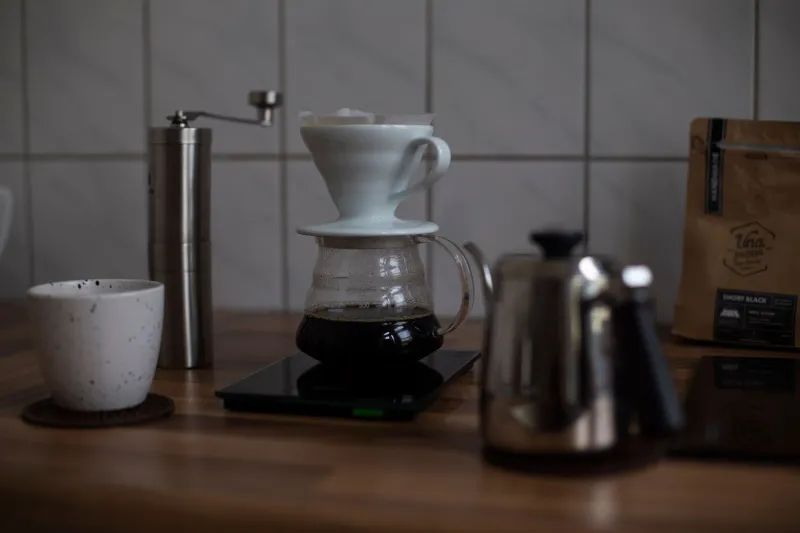
The Counter as a Kind of Self-Portrait
Most of us do not think of our coffee setup as a philosophical statement. We chose our brewer because a friend recommended it, or because it fit a budget, or because it looked right on the counter. And yet, over time, the tools we keep—and the ones we quietly stop using—begin to say something meaningful about how we want to move through our days.
This is not an argument for any particular method. A well-pulled espresso and a carefully tended Chemex pour-over are equally capable of producing extraordinary coffee. What differs is the relationship each method asks you to have with the process, and by extension, with your own time and attention. Examining that relationship honestly can be one of the more illuminating exercises a coffee drinker undertakes.
The Manual Brewer and the Case for Friction
There is a reason that pour-over brewing—whether through a Hario V60, a Kalita Wave, or a Melitta-style cone—has attracted such a devoted following among specialty coffee enthusiasts. The method demands presence. You cannot fully automate it. The grind must be measured, the water temperature monitored, the pour executed with some degree of attention. That friction, for many practitioners, is precisely the point.
Choosing a manual method is often an implicit statement that you value the act of making as much as the result of drinking. It signals a willingness to invest several uninterrupted minutes in a task that the broader culture has largely decided should be invisible. In a morning otherwise governed by notifications and competing demands, that choice to slow down—deliberately, repeatably—functions as a kind of self-imposed boundary.
For those who gravitate toward manual brewing, the equipment is less a convenience and more a ritual object. The worn handle of a gooseneck kettle, the particular weight of a ceramic dripper: these details accumulate meaning over time. They become anchors.
The Automatic Machine and the Wisdom of Efficiency
It would be a mistake, however, to romanticize manual brewing at the expense of everything else. A high-quality automatic brewer—one that controls water temperature precisely, saturates the grounds evenly, and delivers consistent results—is not a concession to laziness. It is an acknowledgment that attention is finite, and that deploying it wisely is itself a form of intention.
For a parent managing a household before school drop-off, or a professional whose mornings are structured around an early call, the automatic machine that produces excellent coffee without demanding focus may be the most honest tool available. It reflects a set of real priorities: reliability over ceremony, consistency over variability, energy preserved for what the day actually requires.
The question worth asking is not whether your automatic brewer represents a compromise, but whether the coffee it produces still earns your attention once it reaches the cup. A machine that runs unnoticed but delivers something worth pausing over has done its job.
The Grinder as a Revealing Detail
If any single piece of equipment functions as a reliable indicator of how seriously someone engages with coffee, it is the grinder. The decision to grind fresh—rather than purchase pre-ground—requires both an investment and a commitment to a slightly more involved process. It is also, from a flavor standpoint, one of the highest-return choices a home brewer can make.
The type of grinder tells its own story. A hand grinder suggests someone who values portability, quiet, and perhaps the meditative quality of the task itself. A quality burr grinder on the counter suggests someone who has decided that consistency matters enough to warrant the counter space and the cost. Neither is superior in absolute terms, but each reflects a different negotiation between effort and outcome.
Paying attention to what you are willing to invest in your grinder—more so, perhaps, than in the brewer itself—is often where the clearest picture of your actual priorities emerges.
Sustainability and the Equipment We Choose
The environmental dimension of brewing equipment is increasingly relevant for American coffee drinkers who care about the full arc of their consumption. Single-serve pod systems, for instance, offer undeniable convenience, but their disposable capsules introduce a waste stream that many environmentally conscious consumers find difficult to reconcile with their broader values. The growing market for reusable pods reflects an attempt to bridge that gap, though the underlying tension remains.
At the other end of the spectrum, a simple cloth filter or a well-maintained metal filter produces almost no waste beyond spent grounds, which can be composted. A French press requires no filter at all. These low-waste methods often appeal to drinkers who see their coffee practice as continuous with other sustainability commitments—not as an isolated habit, but as one thread in a larger pattern of intentional consumption.
Maruyama Coffee's sourcing philosophy begins with the farmer and the land. It follows, then, that how that coffee is ultimately brewed—and what happens to the materials involved—is not entirely separate from the values that motivated the sourcing in the first place.
When the Equipment Stops Fitting
Perhaps the most useful thing this kind of reflection can produce is the recognition that your current setup may no longer match who you are. The brewer you bought three years ago may have suited a version of your life that has since changed. A manual method that once felt meditative may now feel like a burden during a season of particular pressure. An automatic machine that once made sense may now feel like it is costing you something you have come to want back.
Permitting yourself to reconsider your equipment—not because something is broken, but because it no longer reflects your current relationship with the practice—is a form of honest self-assessment. The tools on your counter are not permanent fixtures. They are, at their best, instruments of a practice that should evolve alongside you.
An Invitation Rather Than a Prescription
None of this is to suggest that your brewing equipment carries the weight of your identity, or that switching from a drip machine to a pour-over will transform your mornings. The relationship between tools and values is suggestive, not deterministic. What matters is whether you have chosen your setup with any degree of awareness, or whether it simply accumulated without reflection.
The coffee in the cup is the point. But the path to that cup—the equipment, the routine, the attention brought to bear—reveals something worth knowing about how you have decided to spend the minutes that belong entirely to you.