From Washed to Wild: How Coffee Processing Methods Shape Every Note in Your Cup
Imagine purchasing two bags of coffee from the same farm in Ethiopia, grown at the same elevation, harvested in the same season, from the same variety of plant. You brew them side by side. One is bright, clean, and citrus-forward. The other is dense, jammy, and reminiscent of dried fruit and dark chocolate. The origin is identical. The difference is entirely in how the coffee was processed after it left the tree.
Processing—the set of techniques used to remove the fruit surrounding a coffee seed before it is dried and exported—is one of the most consequential variables in specialty coffee. It shapes acidity, body, sweetness, and the aromatic character that greets you the moment you open a bag. Yet for many coffee drinkers in the United States, label terms like "washed," "natural," or "anaerobic" remain opaque. Understanding what they mean is not just an academic exercise. It is a practical tool for choosing coffee you will genuinely enjoy.
The Washed Method: Clarity as a Design Goal
The washed process—also called wet processing—is built around a single purpose: removing as much of the coffee fruit as possible before drying, so that the seed's intrinsic character can express itself without interference.
After harvesting, the outer fruit skin is stripped away mechanically. The seeds, still coated in a sticky layer called mucilage, are then submerged in water tanks where fermentation breaks down that remaining material over a period of hours or days. Once the mucilage has been removed, the seeds are dried on raised beds or patios.
The result is a cup defined by clarity. Washed coffees tend to emphasize the origin's inherent terroir—the mineral quality of the soil, the brightness of the altitude, the specific character of the variety. If you have ever tasted a Kenyan coffee with pronounced black currant acidity or an Ethiopian Yirgacheffe with floral, bergamot-like notes, you have experienced what a well-executed washed process can reveal.
For drinkers who prefer precision and complexity over sweetness and body, washed coffees often represent the ideal. They reward careful brewing and attentive tasting.
The Natural Method: Fruit as Flavor Architecture
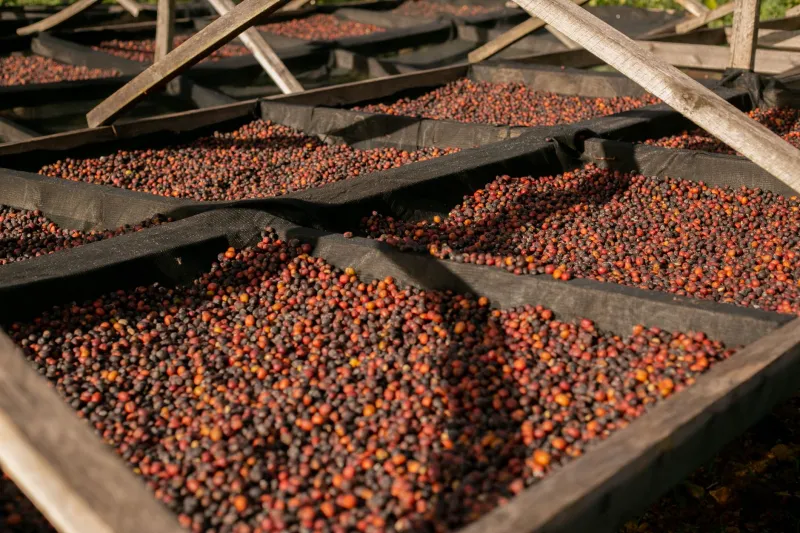
The natural process—also called dry processing—takes the opposite approach. Rather than removing the fruit before drying, the whole coffee cherry is laid out intact and allowed to dry in the sun over several weeks. As the fruit desiccates, its sugars migrate inward, infusing the seed with sweetness and fermentation-derived compounds.
The flavor profile that results is dramatically different. Natural coffees are typically associated with low acidity, heavy body, and pronounced fruit-forward character—blueberry, strawberry, mango, and tropical notes appear frequently in tasting descriptions. The fermentation that occurs during drying also contributes wine-like or fermented qualities that some drinkers find intoxicating and others find overwhelming.
Natural processing originated in water-scarce regions like Ethiopia and Yemen, where the method was a practical necessity rather than a stylistic choice. Today, however, it is employed globally as a deliberate flavor strategy. A natural-processed Brazilian coffee and a natural-processed Ethiopian coffee will express those fruit-forward qualities very differently, filtered through the distinct character of their respective origins.
Honey Processing: Precision in the Middle
Honey processing occupies the space between washed and natural. The fruit skin is removed, but varying amounts of mucilage are intentionally left on the seed during drying. The name derives not from any ingredient but from the sticky, honey-like texture of the mucilage itself.
The spectrum within honey processing is wide. A yellow honey coffee, where minimal mucilage is retained, will taste closer to a washed coffee—clean, with moderate sweetness. A black honey coffee, where nearly all the mucilage is preserved, approaches the body and fruit intensity of a natural. Red and gold honey fall between these poles.
Honey processing is particularly common in Costa Rica and El Salvador, where producers have refined the technique to a high degree. For drinkers who want some of the sweetness and body of a natural without its full fermentation intensity, honey-processed coffees offer a compelling middle path.
Experimental Methods: Pushing the Boundaries of Flavor
Over the past decade, a new category of processing has emerged under the broad label of "experimental" or "innovative" methods. These techniques borrow from winemaking, brewing, and food science to introduce variables—specific yeast strains, anaerobic (oxygen-free) environments, extended fermentation periods, or the addition of external ingredients—that push flavor profiles into entirely new territory.
Anaerobic fermentation involves sealing coffee cherries or depulped seeds in sealed tanks, where fermentation occurs without oxygen. The anaerobic environment encourages the development of lactic acid and other compounds that produce distinctive flavors: intensely sweet, often syrupy, with notes that can range from tropical fruit to red wine to dark honey.
Carbonic maceration, adapted directly from winemaking, introduces carbon dioxide into the fermentation environment, creating yet another flavor dimension. Coffees processed this way often exhibit unusual aromatic complexity—sometimes described as almost effervescent or candy-like.
Inoculated fermentation involves introducing specific yeast strains to the fermentation process to guide flavor development in a controlled direction. Some producers have experimented with wine yeasts, sake yeasts, or proprietary cultures developed specifically for coffee.
These methods are not without controversy. Purists argue that heavily manipulated processing obscures the origin character that makes specialty coffee meaningful. Proponents counter that experimentation expands the vocabulary of what coffee can express. Both perspectives have merit, and the best approach is to taste with an open mind rather than arriving at the cup with a predetermined verdict.
Reading Labels Like an Insider
Armed with this framework, coffee labels begin to yield more information than they initially appear to offer. When you see "washed" on a bag from Colombia, you can anticipate brightness and clarity. When you see "natural" on an Ethiopian lot, you can prepare for sweetness and fruit complexity. When you see "anaerobic" or "experimental," you are being invited into a specific flavor territory that the producer has intentionally constructed.
A few practical principles for applying this knowledge:
Match process to brew method. Washed coffees often shine in pour-over and filter brewing, where their clarity and acidity can fully express themselves. Natural and honey-processed coffees frequently perform well as espresso, where their body and sweetness integrate beautifully with milk-based drinks.
Consider your flavor preferences honestly. If you find heavy fermentation notes off-putting, a lightly washed coffee from a high-altitude origin will likely serve you better than an experimental anaerobic lot. Neither is superior—they are simply different.
Ask your roaster for context. A roaster who sources with intention will be able to explain why a particular processing method was chosen for a specific lot and what it contributes to the final cup. That conversation is part of the value of working with a specialty roaster.
At Maruyama Coffee, processing method is never an afterthought. It is a deliberate element of the sourcing conversation—a decision made in partnership with producers who understand how their choices at origin will ultimately shape the experience in your cup. Learning to read those choices is one of the most rewarding steps you can take as a coffee drinker.